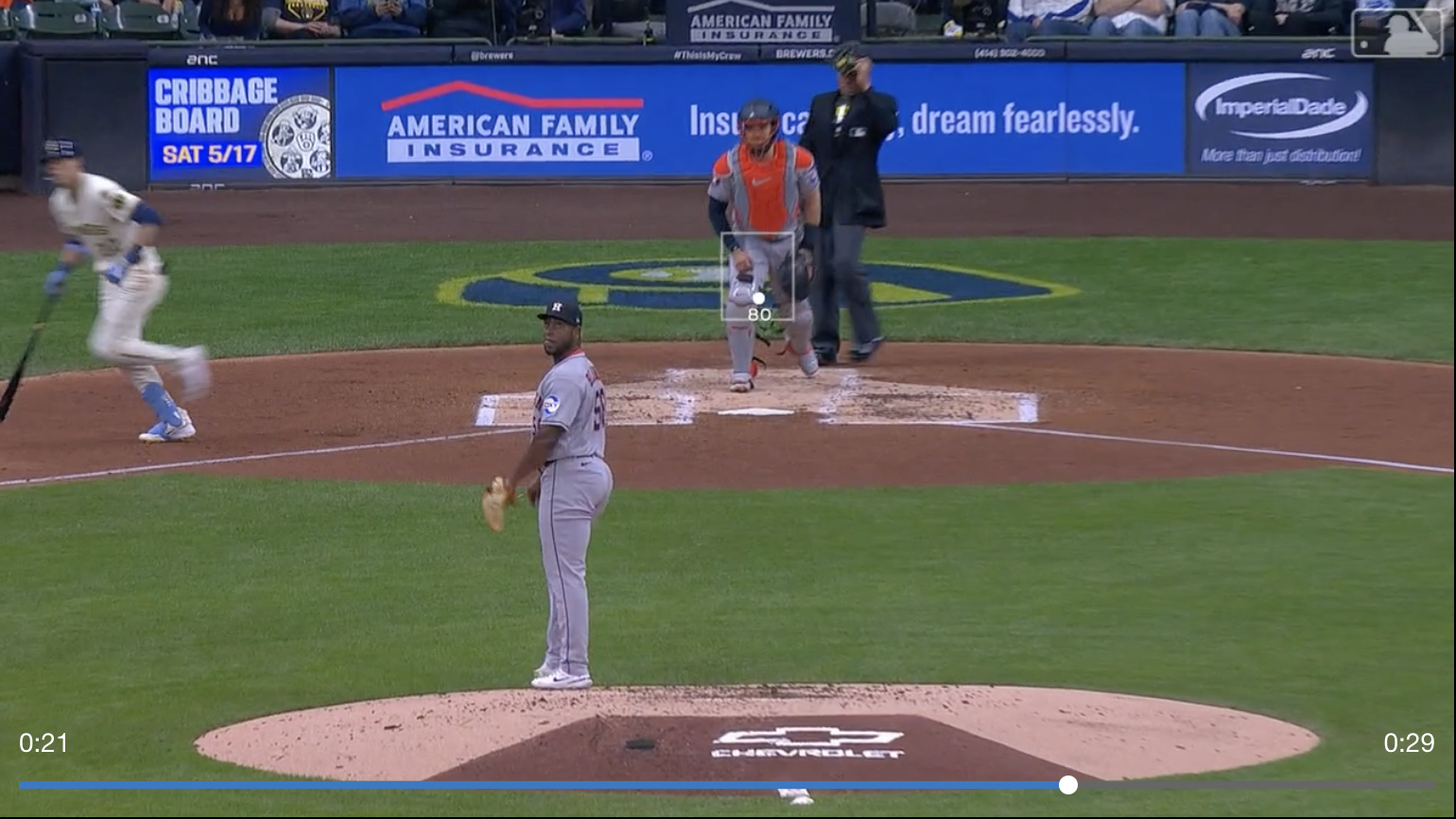
Pitcher Ronel Blanco, of the Houston Astros, tracks a ball off the bat of Christian Yelich, of the Milwaukee Brewers. The ball wound up going for a two-run home run, thus taking the game from a state where there were runners on, to a state where the bases were empty.
Runners are No Longer On Base
Once at least one runner reaches base, the only way to get back the bases being empty is by either getting those runners out, or getting them in (without leaving a batter/runner on base). The most dramatic way this might happen? Probably the home run: everyone on base scores, and no one is left on base afterwards. Or, you could have something like a double play, where the only base runner is forced out, prior to the batter/runner being forced out at first. No matter how it happens, when the bases are emptied and the inning is still continuing, the next plate appearance will start with no one on base1.
First, the defense will make adjustments in their positioning, especially in the infield, and more especially if they no longer have to deal with a runner on first. In such a case, the first baseman will no longer have a runner to hold on, and thus they can play further off the base, and the middle infielders no longer have the possibility of a double play, and thus they can potentially play a little further away from second, if desired.
Meanwhile, the pitcher can return to pitching out of the windup, as long as pitching out of the windup is something they want to do to begin with. Otherwise, they continue pitching out of the stretch.